

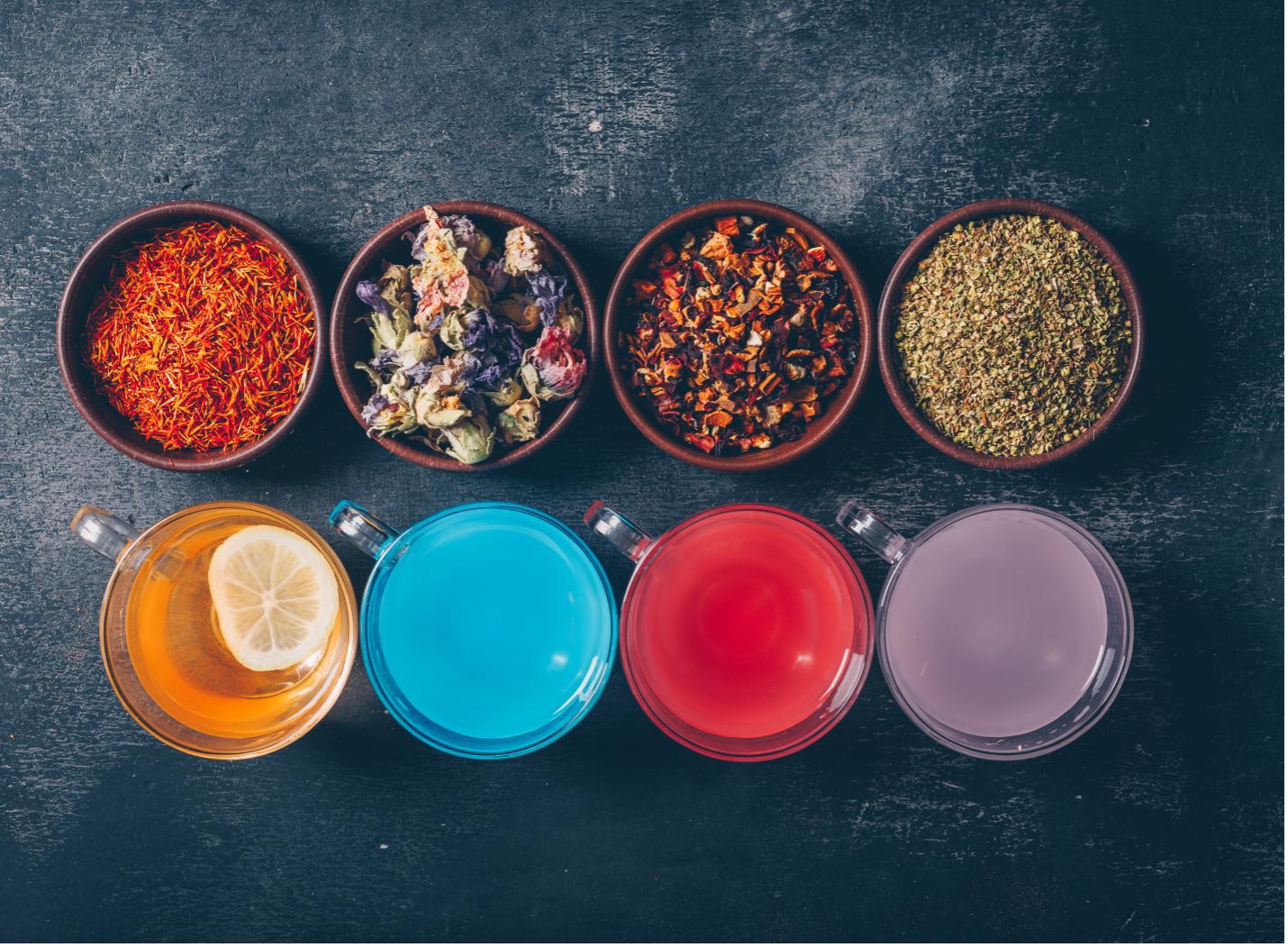
Beverages are one of the most demanding categories for natural color. There’s nowhere for an unstable pigment to hide a drink that fades, clouds, or shifts shade in the bottle is immediately visible to the consumer, often before the product even leaves the shelf. That makes choosing the right natural food colors for beverages less about picking an attractive shade and more about understanding how that pigment will behave in a liquid system over the product’s entire shelf life.
Why Beverages Are a Unique Challenge
Unlike a baked good or a piece of candy, a beverage doesn’t have starch, fat, or a solid matrix to help stabilize a pigment. The color is fully exposed to light, oxygen, and whatever pH and processing conditions the drink undergoes whether that’s hot-fill, pasteurization, or cold storage. Any weakness in a natural color’s stability profile tends to show up faster and more visibly in liquid form than almost anywhere else.
That’s why natural beverage coloring decisions usually start with three questions: What’s the product’s pH? Is it heat-processed? And does it need to stay perfectly clear, or is some natural cloudiness acceptable?
Start With Solubility
The first filter for any beverage color is solubility. Water-based beverages need water-soluble pigments, while beverages with a fat or oil component (some functional drinks, creamers, or dairy-adjacent products) may call for oil-dispersible or emulsified colors instead. Using the wrong solubility profile is one of the most common reasons a color fails in a beverage application it may look fine at first, then separate, ring, or settle out during shelf storage.
Match the Pigment to the Beverage’s pH
Many natural pigments are pH-sensitive, meaning the same ingredient can look noticeably different in an acidic sports drink versus a neutral-pH dairy beverage.
- Anthocyanin-based colors (black carrot, purple sweet potato, red cabbage) shift across the red-purple-blue spectrum depending on pH, which can be a formulation asset or a liability depending on whether the shift is desired.
- Betanin (beetroot) performs best in a moderate pH range and needs particular attention in more acidic beverages.
- Carotenoid-based colors (beta carotene, annatto, paprika oleoresin) are generally more pH-stable but are oil-soluble, so they need to be formulated as a water-dispersible form for most beverage use.
- Curcumin (turmeric) and spirulina blue each have their own pH and light sensitivities that should be tested in the specific formulation rather than assumed from general references.
Consider the Processing Method
A cold-pressed juice and a shelf-stable, pasteurized ready-to-drink beverage put very different stress on a natural color. Heat-stable options like gardenia blue or specially stabilized beetroot extracts hold up better through pasteurization and hot-fill processes, while more heat-sensitive pigments like standard spirulina blue are often better suited to cold-chain or minimally processed beverages.
Don’t Overlook Clarity and Light Exposure
Beverages in clear glass or PET bottles are exposed to significant light during retail display, which can accelerate pigment fading especially for light-sensitive colors. If the packaging is clear rather than opaque or tinted, it’s worth factoring light stability into the color decision from the start, not discovering it after a batch has faded on the shelf.
A Practical Selection Checklist
When evaluating a natural drink color, work through these questions before committing to a formulation:
- What is the finished beverage’s pH range, and does it vary by SKU or flavor variant?
- Will the product be pasteurized, hot-filled, or cold-processed?
- Is the beverage water-clear, cloudy, or opaque, and does the packaging expose it to light?
- What shelf life does the product need to hold its color through?
- Does the desired shade require a single pigment, or a blend of sources to achieve the right tone?
- Are there flavor or aroma considerations, since some natural colors carry a mild flavor note at higher use levels?
Common Beverage Color Applications
- Juices and juice drinks: Often colored with the same fruit or vegetable families already present in the formulation beetroot, black carrot, or elderberry for reds and purples.
- Sports and functional drinks: Frequently favor spirulina blue, beta carotene, or butterfly pea flower for bright, “clean” visual appeal that matches an active, natural positioning.
- Sodas and carbonated beverages: Need pigments that hold up under both acidity and extended shelf life, making betanin blends and carotenoid-based colors common choices.
- Dairy and plant-based beverages: Typically require colors compatible with a neutral-to-slightly-acidic pH and, in the case of plant-based milks, colors that disperse evenly without settling.
Work With a Supplier Who Tests in the Real Formulation
General stability data is a useful starting point, but it isn’t a substitute for testing a beverage food color in the actual finished product, under the actual processing conditions the beverage will go through. Reputable natural color suppliers offer application testing and can help troubleshoot before a formulation goes to full-scale production, which is far cheaper than discovering a stability problem after launch.
The Bottom Line
Choosing the right natural color for a beverage comes down to matching pigment chemistry to the product’s pH, processing method, packaging, and shelf-life target not just picking the shade that looks best in isolation. With the right source and the right supplier support, beverages can achieve the same bold, consistent color that consumers expect, without relying on synthetic dyes.