

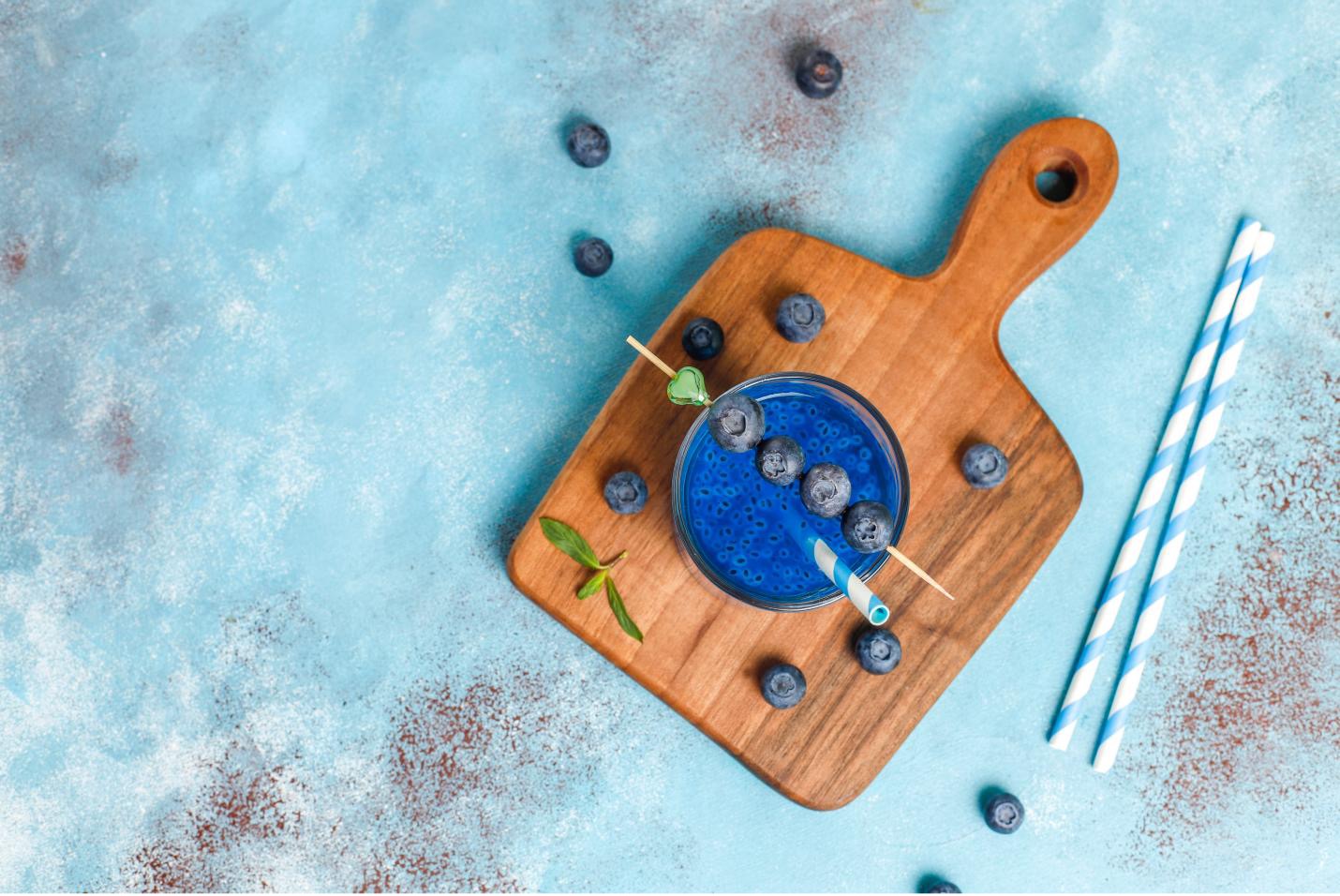
Blue is the rarest color in nature, which is exactly what makes it so valuable on a store shelf. A bright blue beverage or a saturated blue gummy bear pulls the eye before a shopper even reads the label. For decades, that shade came almost exclusively from synthetic dyes like FD&C Blue No. 1. But as clean-label demand grows and regulatory scrutiny of synthetic dyes tightens, formulators are under pressure to find a natural blue food coloring that performs just as reliably.
The good news: natural blue has caught up. It’s no longer a compromise color that fades to gray-green under acid or heat. With the right source and the right supplier, natural blue food color can now deliver the same shelf appeal as its synthetic counterpart while checking the clean-label box consumers increasingly expect.
Why Natural Blue Is Harder to Formulate Than Other Shades
Reds, yellows, and oranges have no shortage of natural sources beets, turmeric, paprika, annatto. Blue is different. Very few plants, fruits, or algae naturally produce a stable blue pigment, which is why the category has historically lagged behind other natural colors in both availability and performance.
That scarcity is also why blue tends to be the color formulators worry about most when reformulating away from synthetic dyes. A blue food coloring alternative needs to hold its hue through pasteurization, withstand a product’s pH range, and survive months on a shelf under store lighting all without the pigment stability that synthetic dyes were engineered to provide.
The Three Natural Blue Sources Worth Knowing
Spirulina Blue
Spirulina, a blue-green algae, is probably the most recognized name in this space largely thanks to its popularity in smoothies, lattes, and “superfood” marketing. Spirulina blue food coloring delivers a clean, vivid blue and carries strong consumer appeal because of its algae-derived, nutrient-dense reputation.
The tradeoff is stability. Spirulina blue is sensitive to heat, light, and pH swings, which can make it a better fit for cold-processed or refrigerated products than for anything that goes through a high-heat production line. Formulators working with spirulina generally need to account for these sensitivities early in development rather than trying to patch around them later.
Butterfly Pea Flower
Butterfly pea flower extract brings something spirulina can’t: a color-shifting effect. In its natural state it produces a deep blue, but the pigment reacts to pH add something acidic like lemon juice and it shifts toward purple or pink. That property has made it a favorite for novelty and “Instagrammable” beverage launches, where the visual transformation becomes part of the product experience.
Beyond the color-changing trick, butterfly pea flower is also useful for straightforward blue and blue-violet applications, particularly in lower-pH formulations where it tends to perform well.
Gardenia Blue
Gardenia blue is produced from geniposide extracted from gardenia fruit through a fermentation and refining process. Compared to spirulina, it generally holds up better across a wider pH range and shows stronger resistance to heat, light, and acid qualities that make it a dependable choice for products that go through more demanding processing conditions, from pasteurized beverages to cooked confectionery.
Because blue pigments are naturally scarce, gardenia blue has become an increasingly important option for manufacturers who need consistent color performance at scale, not just an attractive shade in a lab sample.
Matching the Source to the Application
Beverages: Cold or minimally processed beverages have more flexibility to use spirulina, especially where its “superfood” positioning supports the marketing story. Beverages that go through pasteurization or extended shelf storage typically do better with gardenia blue, given its stronger resistance to heat and light degradation. Butterfly pea flower works well in both categories, particularly where a pH-driven color shift adds to the product’s appeal.
Confectionery: Candy and gummy production usually involves heat, sugar concentrations, and sometimes acidic flavor systems all conditions that test a natural color’s limits. Gardenia blue tends to be the more forgiving option here, while butterfly pea flower can work well in coatings, panning, or lower-pH gummy bases where its natural tone is an asset rather than a liability.
In many cases, the right answer isn’t a single ingredient at all it’s a blend. Combining sources, or pairing a natural blue with a complementary shade, gives formulators more control over the final hue while balancing cost, stability, and label simplicity.
What to Ask a Natural Color Supplier
Choosing a natural blue food coloring isn’t just about picking a source it’s about picking a supplier who can back that source with consistency. Before committing to a formulation, it’s worth asking:
- Is the pigment supply vertically integrated, from raw material through finished product, or sourced through multiple intermediaries?
- What pH and thermal stability data is available for the specific application beverage, confectionery, or otherwise?
- Can the supplier customize concentration and shade to match an existing target color?
- What certifications does the ingredient carry (Non-GMO, Halal, organic, etc.), and do they align with the brand’s label claims?
- Is technical support available for application testing, not just ingredient supply?
The Bottom Line
Natural blue no longer means settling for a duller, less stable version of what synthetic dyes could do. Between spirulina’s clean algae-derived blue, butterfly pea flower’s color-shifting versatility, and gardenia blue’s processing resilience, most beverage and confectionery formulations can find a natural source that meets both the visual bar and the performance requirements of modern production lines.
The real work is in the details matching pigment to pH, processing conditions, and shelf-life targets which is where a supplier with deep application expertise, not just an ingredient catalog, makes the difference between a promising lab sample and a product that still looks right six months after it ships.