

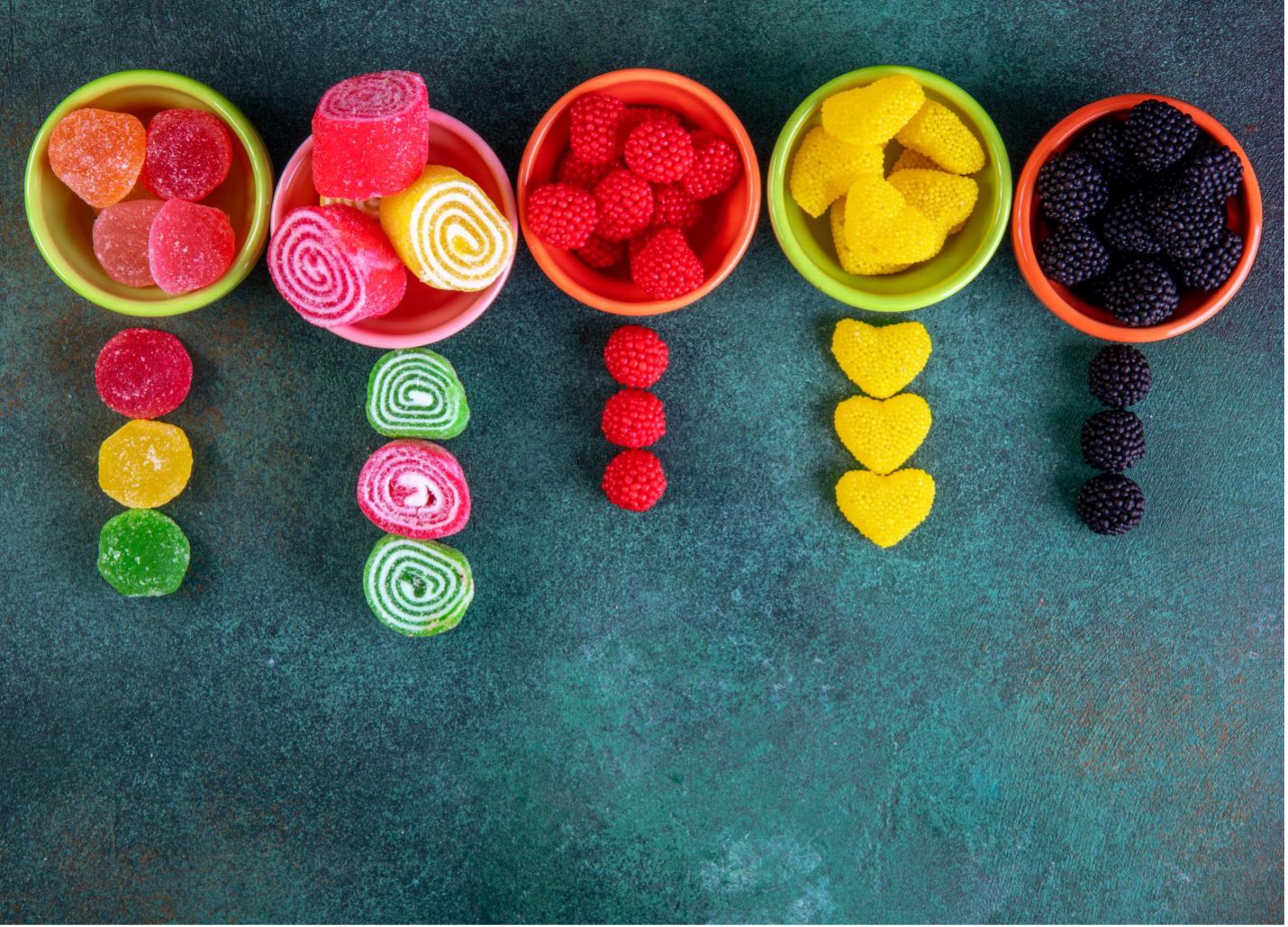
Gummy candy might be the single toughest test for a natural color. Between the high cooking temperatures needed to set the gel, the sugar and acid levels used for flavor and preservation, and the long shelf life gummies are expected to hold, there’s a lot working against a pigment before it ever reaches the shelf. Getting natural color stability in gummies right requires understanding exactly where in the process a color is most likely to fail and formulating around it from the start rather than troubleshooting after the fact.
Why Gummies Are So Demanding on Color
A typical gummy formulation is cooked at high temperature, often in the range of 220–250°F, to achieve the right texture and moisture content. That heat exposure alone can degrade heat-sensitive pigments before the candy even reaches its mold. On top of that, most gummies sit at a fairly acidic pH both for flavor and for microbial stability which adds another layer of stress for pH-sensitive natural colors. Add months of ambient shelf storage under store lighting, and it’s easy to see why gummy color stability issues show up so often in reformulation projects.
The Main Stability Failure Points
Heat During Cooking
The initial cook is usually where the most damage happens. Some natural pigments break down rapidly at sustained high heat, resulting in a duller, muddier finished color even if the raw ingredient looked vibrant going in. Choosing heat-stable sources or adding color later in the process, after the hottest step, where the recipe allows it can meaningfully preserve vibrancy.
Low pH From Acidulants
Citric acid, malic acid, and other acidulants used for flavor and shelf stability can shift or fade certain natural pigments, particularly anthocyanin-based colors that are highly pH-reactive. In some cases, this shift is manageable and even useful (a slight color drift toward the target shade); in others, it pushes the color further away from what was intended.
Light Exposure During Storage
Gummies are frequently packaged in clear bags or jars for shelf appeal, which means the finished product is exposed to retail lighting for weeks or months. Light-sensitive pigments can visibly fade over that time, even if they survived the cooking process intact.
Sugar Concentration and Water Activity
The high sugar content in gummies affects water activity and can influence how a pigment behaves in solution, sometimes leading to uneven color distribution or migration within the gummy itself over time.
Strategies to Improve Stability
Choose Sources With Proven Heat and Acid Resistance
Not all natural pigments are created equal under these conditions. Black carrot and other anthocyanin sources with documented acid and heat resistance tend to outperform more delicate options like standard spirulina blue in a gummy application. Gardenia blue, similarly, tends to hold up better than more heat-sensitive blues in a cooked confectionery base.
Time the Addition of Color in the Process
Where the recipe allows, adding color later in the cook closer to the point where the batch is cooling and about to be deposited reduces total heat exposure and can noticeably improve the final shade compared to adding color at the start of the cook.
Consider Encapsulation or Stabilized Formats
Some natural color suppliers offer stabilized or encapsulated versions of sensitive pigments specifically designed to better withstand heat and acid exposure during confectionery processing. These formats can cost more per unit but often reduce the total amount of color needed and improve batch-to-batch consistency.
Adjust Concentration to Account for Fade
Because natural colors are more susceptible to fading over shelf life than synthetic dyes, it’s common practice to slightly over-formulate the initial color intensity, so the gummy still looks vibrant at the end of its shelf life rather than only at the moment of production.
Test Under Real Shelf Conditions, Not Just at Batch-Out
A color that looks great fresh out of the mold can still fail weeks later. Running accelerated shelf-life testing exposure to light, heat cycling, and time before finalizing a formulation catches stability problems while they’re still cheap to fix.
Matching Color Sources to Common Gummy Shades
- Reds and pinks: Black carrot and purple sweet potato generally offer the strongest heat and acid resistance for gummy applications.
- Oranges and yellows: Annatto and beta carotene tend to hold up well, particularly in oil-dispersible or emulsified forms suited to a sugar-syrup matrix.
- Blues: Gardenia blue is typically the more dependable choice for cooked confectionery, given its processing resilience compared to spirulina.
- Purples and multi-tone effects: Blends of anthocyanin sources, sometimes combined with a small amount of blue, can achieve consistent purple shades that hold through the cook.
Work With Your Color Supplier Early, Not After a Problem Shows Up
Because gummy formulations vary so much in cook temperature, pH, and sugar system, the most reliable path to good natural gummy coloring results is testing the actual pigment in the actual recipe before scaling up. A supplier experienced in confectionery applications can often flag likely failure points before a single batch is cooked, based on the acid level, cook temperature, and target shade.
The Bottom Line
Gummy candy pushes natural color to its limits high heat, low pH, sugar concentration, and long shelf exposure all stack up against pigment stability. But with the right source selection, smart timing in the production process, and realistic shelf-life testing, it’s entirely possible to hit bold, consistent, naturally colored gummies that hold their shade from the first bag sold to the last.